

Long Run Fueling Ladder
Created by: Lisa Fahy, MSc, SENr — Sports Nutritionist
For: GTC Performance Hub
What this guide is for
Use this on long runs and long race rehearsals to build a race-ready gut and a simple, repeatable fueling routine.
Key takeaways
- Start low → build up (gut training matters).
- Fuel consistently (don’t wait until you feel empty).
- Most gels are ~20–25g carbs — use timing to hit your target.
- Take gels with water (small sips) to improve tolerance.
- Never try a new gel on race day.
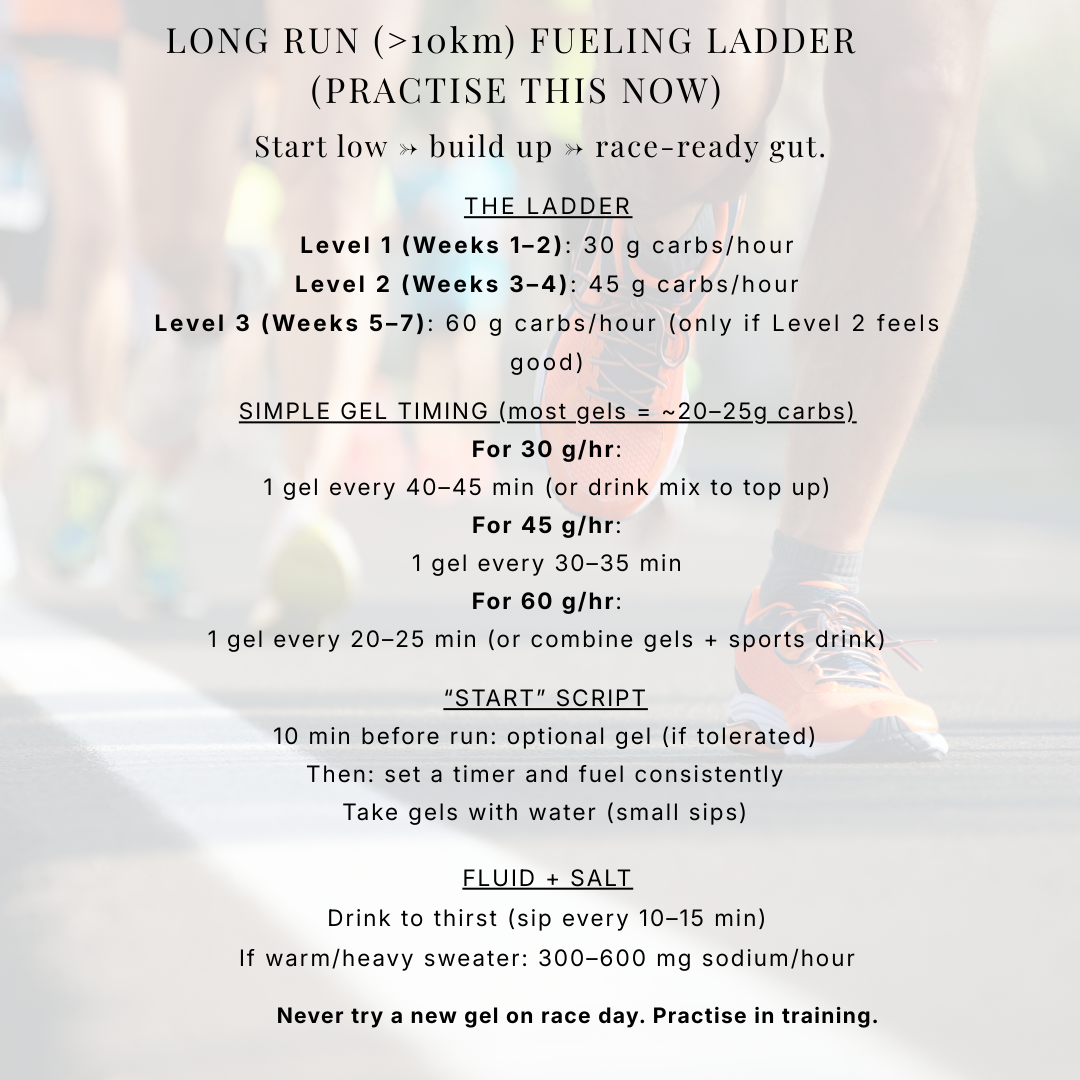
The Ladder
- Level 1 (Weeks 1–2): 30 g carbs/hour
- Level 2 (Weeks 3–4): 45 g carbs/hour
- Level 3 (Weeks 5–7): 60 g carbs/hour (only if Level 2 feels good)
Simple gel timing (most gels = 20–25g carbs)
- For 30 g/hr:1 gel every 40–45 min (or drink mix to top up)
- For 45 g/hr:1 gel every 30–35 min
- For 60 g/hr:1 gel every 20–25 min (or combine gels + sports drink)
“Start” script
- 10 min before running: optional gel (if tolerated)
- Then: set a timer and fuel consistently
- Take gels with water (small sips)
Fluid + salt
- Drink to thirst (sip every 10–15 min)
- If warm/heavy sweater: 300–600 mg sodium/hour
Common mistakes
- Leaving fueling too late (first gel after 60–70 minutes)
- Jumping straight to 60 g/hr without building tolerance
- Taking gels without water
- Trying a new product on race day
Troubleshooting
- Stomach sloshy: smaller sips more often; reduce concentration; slow intake rate
- Nausea late in run: switch to smaller doses more frequently; keep it simple
- Energy crash: start fueling earlier; move up a ladder level gradually
Need this personalised? If you’re training for longer events (70.3/IM), struggling with GI issues, or want a race-day fueling plan, message me for 1:1 support.
For more nutrition tips, and useful links, visit my Nutrition Hub
Contact: Lisa at - hello@elevitanutrition.com
Disclaimer: This content is general education for GTC members and isn’t medical advice. Individual needs vary—please practise fueling in training. If you have a medical condition (e.g., diabetes, GI disease) or a history of disordered eating, seek individual clinical support.