

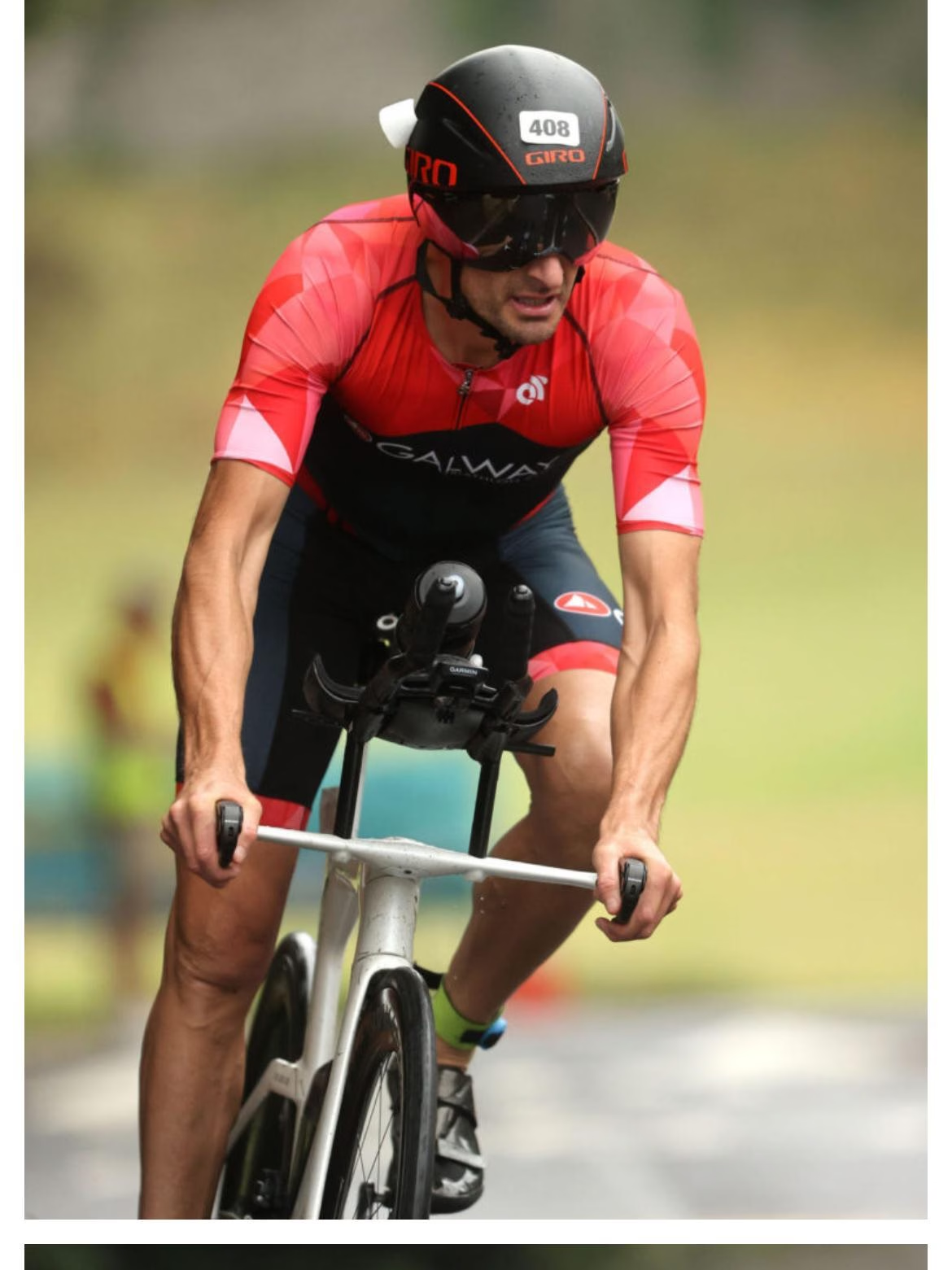
 CO’D: So, we’ve been doing our weekly Brick Q and A’s in short form for a few months now, and they’ve been a great way of getting to know our GTC club members.
But I wanted to try something a little different this week, something more in-depth. Given your experience and history with the club, I thought there was no better person to chat with than you, Ruaidhrí.
So let’s kick off.
CO’D: Tell me about your sporting background and family sporting history. Were your mother or father sporty?
RG: Yeah, my dad and mum were both runners. My dad is in his 80s now, but he was a very competitive club runner and college runner, and we were all inspired by him.
My mum ran too. They met through the university team in Galway. That’s how they met. They both ran for the college.
My dad was running 36 minutes for 10K right into his mid-60s.
CO’D: Amazing.
RG: So that’s where everyone in our family’s inspiration came from, for sure.
My own sporting background was like everybody else. I played Gaelic football in primary school, then through my teenage years I left it and had other interests in life, social and whatnot.
I didn’t really come back to sport until my late 20s. That’s when I discovered swim, bike and run.
CO’D: Late 20s. Were your mother or father long-distance runners, marathon distance?
RG: Middle distance. Marathon was too far for my dad. Mum was an 800 metre runner.
Now, mum had eight kids and she worked as a doctor, so she always just kept fit from there on in. She never really had the time. But my dad ran every day right up into his 70s.
CO’D: And when you say you came to swim, bike and run in your late 20s, how did that happen?
RG: After college, I started doing athletics again. I did a little bit with Galway City Harriers as a kid, but I was never very competitive.
I also did some cycling in secondary school with Thermo King, which was one of the first cycling clubs in Galway City. Then I left it. I wasn’t strong as a youth at all.
I left all sports until my mid to late 20s. Then I had enough of the partying and being hungover every other weekend.
Then I discovered running, then biking, then started taking swim lessons.
I was basically that guy in the Aldi wetsuit going to the first few triathlons. I was way back in the swim, but I’d caught the bug and started chasing, getting fitter, getting stronger and improving my times.
CO’D: And were you with a club at that point, or training on your own?
RG: I joined Galway Triathlon Club in 2005.
We still see our clubmate Pat Burke around now, still in the swims. Burkey was always promoting the club. He had just moved to Galway. It was a very small club at the time.
I think the club was started by Donal Mahon and a few others, and it just expanded from there.
CO’D: At that point, were you competing at sprint distance? What was your first event?
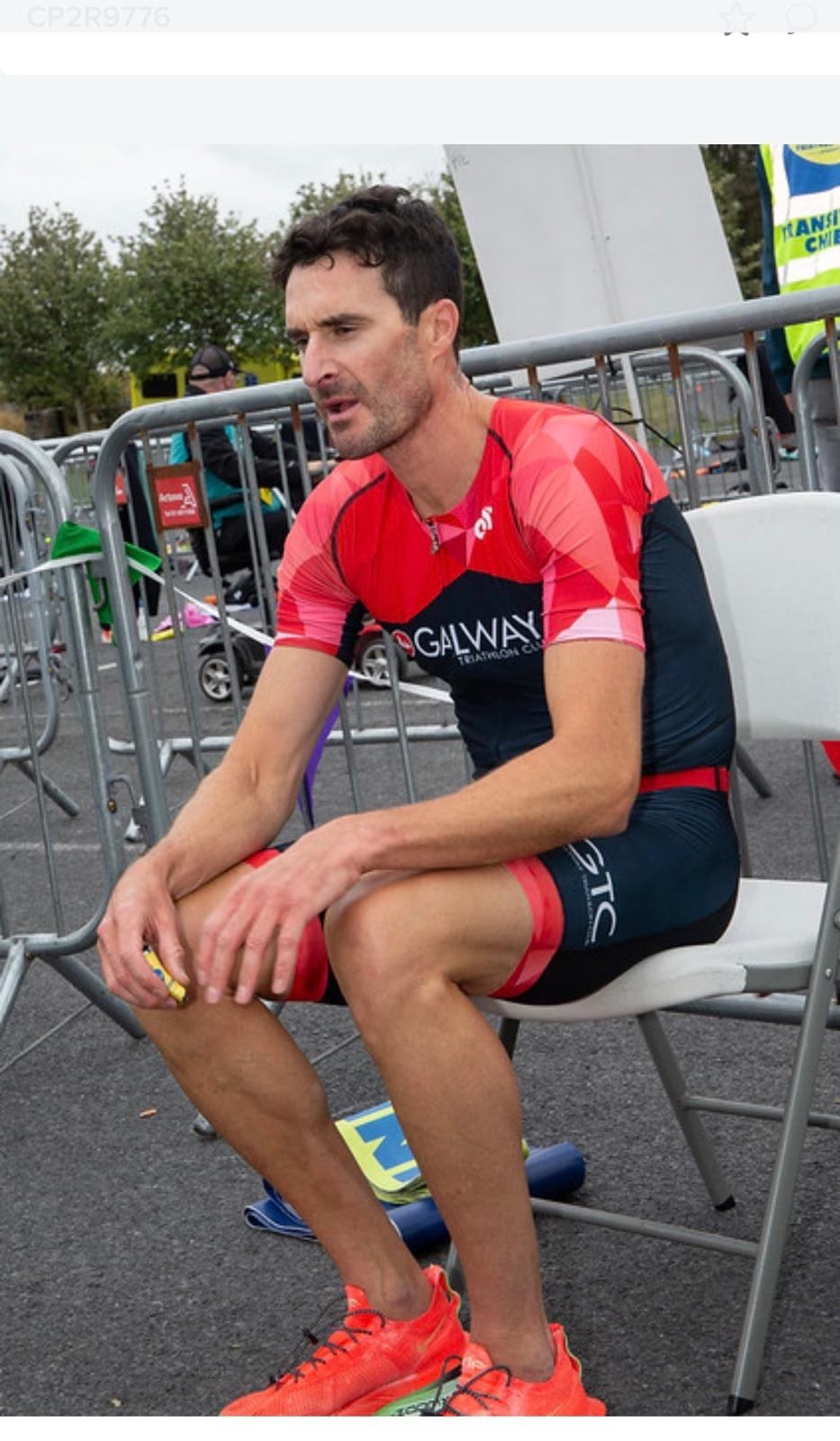 RG: My first triathlon was in Limerick and it had an indoor swim.
Limerick Tri Club were a brilliant club. They used to put on duathlons in the winter. That’s when I started, around 2005 or 2006.
Then they had an introductory triathlon in the swimming pool there, and we did that.
My first proper triathlon was Kilkee, I’d say in about 2006. I was swimming in a big surf wetsuit, and it was full-on Hell of the West. Such an eye-opener.
CO’D: That’s a really challenging course.
RG: Yeah. A good swell in the sea, a tough bike and a very tough run.
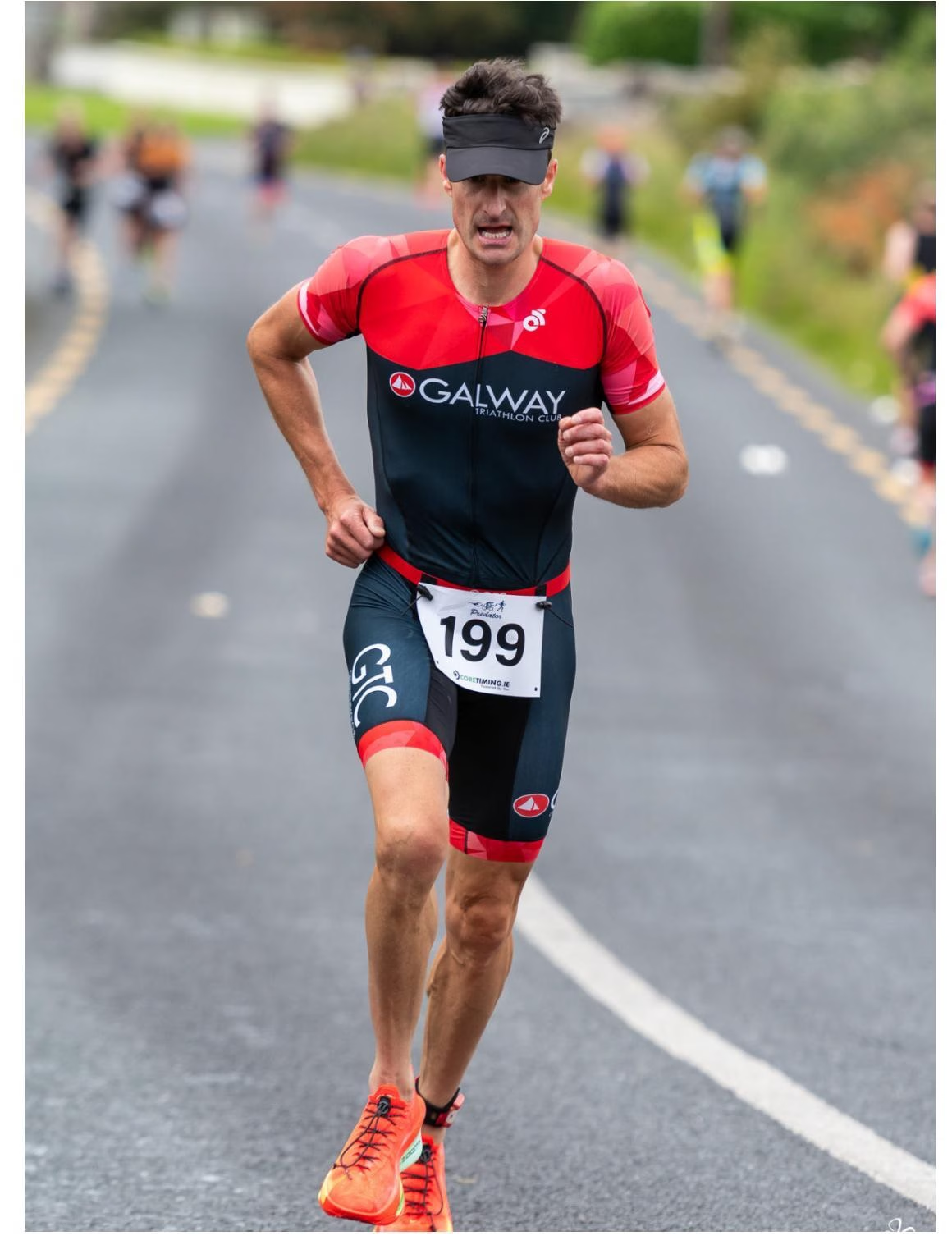
I was a runner by then, and the run was always my trump card. I’d be way back in the swim, same on the bike, and then you’d come through a little bit and pick off a few people on the run.
CO’D: So you had the running background, and the cycling obviously built up over time.
RG: I got a huge interest in cycling. I enjoyed the bike. I enjoyed being out on a bike, exploring and covering great distance.
I got back into cycling with James O’Donnell and Brian O’Donnell, and then I really started to get bitten by the cycling bug.
I joined Galway Bay Cycling Club, and there were a couple of us who did the Rás in 2009 and 2010. We were bikers at that stage.
I left triathlon for a few years and came back to it again in the 2010s, around 2010, 2011 and 2012. I started getting more of an interest in triathlon and became more focused on it then.
CO’D: And you were what age at that point?
RG: Early 30s.
CO’D: Early 30s. That’s still relatively young in this sport. Many of us came to it a lot later.
RG: Yes, but I was still past it, you know? When you see the young lads now!
Our best days were past us, but still, you could see progress. You could see you were improving all the time.
The biggest improvement is always the swimming. Our progression in swimming at the start was immense. We went from really struggling to do 100 metres in the pool, or being well puffed after hundreds, to swimming 1500 in a triathlon.
With swimming, you’re always looking for tweaks. How can I improve?
CO’D: But it’s so technical, isn’t it? To this day, we’re all still trying to figure it out.
RG: Even when we’re swimming in the sea, the things going around your head! Is my hand going in correctly? Is my elbow high? Am I catching? Am I pulling?
It’s never-ending. It’s not like running or cycling. You just do those. With those, you don’t have to think at all.
CO’D: So swimming would always have been your weaker discipline?
RG: Sure, but I enjoy swimming. You can bang out a swim in 30 minutes.
I swim with Art Ó Neachtain all the time and it’s on my doorstep. Then I swim with the water polo lads during the week in the winter.
It’s a great motivation to actually go to the pool and swim with Ross Coll and Barry Coll some mornings during the winter, when the kids are at their own swimming squads.
I don’t enjoy pool swimming. It’s a chore. But once you do it, and once you’re in on it, it’s fun when you’re doing your sets.
CO’D: For people starting out, and we have a lot of beginners coming through the club, how did you go from zero to getting up to that first 1,500 metres? Was it lessons, or were you self-taught?
RG: No, it was lessons. It was part of the tri club sessions.
And literally watching good swimmers as well. All our strokes are different and no one’s looks perfect, but it’s about looking at how the fast swimmers are propelling themselves through the water.
Their stroke might not be the most perfect-looking stroke, but they’re doing it.
I’m even watching the European Swimming Championships on the box here, and they’re breathing every stroke and the head is bobbing, yet they’re flying through the water.
It’s just trying to be aware of what they’re doing and trying to mirror that to our level.
CO’D: That’s the hard part, isn’t it?
RG: Isn’t it just?
CO’D: Swimming will always be a mystery to me.
RG: Yeah, I know. I’m there too.
CO’D: You were taking part in triathlons at sprint and Olympic distance. How did you move into middle-distance and longer-distance racing?
RG: I’d say my first half distance, or 70.3 event, was the Lost Sheep down in Kenmare.
CO’D: How many years into your triathlon journey were you at that stage?
RG: Pretty early, yeah.
But I had natural fitness and it never felt like a big stepping stone. I never overthought it. I’d show up, and that was it. Get on with it.
I was able to run 21K. I was able to bike 90K. The swim was only a little bit extra, so I could get through it.
When you’re in a race, you just go. I find I go into autopilot, regardless of what shape I’m in. Whether I’m feeling strong or not as strong, something clicks and you just go and race.
Don’t overthink it. That’s always been the case for me, whether it’s a local aquathlon or a National Championships. Just go.
CO’D: Did you stay around that middle distance for a while, or were you then looking to go longer?
RG: No, whatever was on the calendar.
I remember my first, or maybe second, Lost Sheep. It was at the mouth of the bay, going into the river. The tide had turned.
In those days, we used to go under the bridge. You’d swim at a point and go through Kenmare Bay and under the bridge.
But the tide had turned and gone against us. The top five had gone through and got under the bridge, but then it turned into a really strong current.
The rest of us were swimming the 1900 in 50 minutes to an hour, which was extreme. We were all expected to get in around 30 minutes.
Since then, they changed the whole swim to just be in the bay. But that’s it. We just didn’t overthink it. We just went and swam it.
Kenmare is usually the end of the season, so you’d look at duathlons then at the other end of the season, around January.
CO’D: So you were doing lots of races. You had a real appetite for it.
RG: Yeah, and I was successful early on. When I say successful, I mean club successful in duathlon.
Without the swim, I didn’t have that anchor of having to swim. It was run, bike, run.
I’d run and be competitive from the get-go, then hold my own to an extent on the bike, and then be able to pull out the run again.
Now everything is reversed. Now that I’ve slowed down and picked up injuries, I dread the run in triathlon. It’s the hard part now.
You’re finishing the bike and you’re there thinking, “Oh jeez, I’ve got a 10K run to do here now. I better knock it back and save a little bit.”
You go through the motions when you’re running. Then you see these younger guys, or fit guys, or real runners, and they plough through it.
CO’D: You have to adapt, right?
RG: You do. That’s it.
CO’D: Let’s talk about the lead-up to Kona. I think you’re the only person in the tri club who’s ever competed at Kona.
RG: The year before Kona, I qualified in 2016 at Barcelona.
I was in great shape, but I’ve always had knee injuries. I have osteoarthritis in both knees and I’ve had many surgeries on my right knee and a couple on my left.
That summer, 2016, I was going okay. I raced all the National Series stuff and was featuring okay in it.
I did Barcelona and I had gastro issues during the run. I was in and out of the portaloos.
I had a decent swim, I went under the hour, had a good bike, and then I was on the run and everything felt okay.
Like anybody in a long-distance race, you’re susceptible to stomach dramas. But I got through that and went under nine hours for the race. I was in good shape.
I turned 40 that summer, and that’s it, I qualified.
I said I’d go and just did the same thing. Trained away. Biked on a Sunday with the lads. A little bit of running, a little bit of swimming, kept it all going.
Then the following summer, I was racing well. I raced in Kilkee again. Then early July, my knees just completely gave in. I couldn’t run at all.
So I didn’t run that whole summer, 2017.
About six weeks before Kona, I had to have an arthroscopy, keyhole knee surgery, to get a piece of cartilage removed that was floating around.
So coming into Kona, I had no running done.
I remember doing five minutes on a treadmill, five minutes off, that kind of stuff.
Going into Kona, I took from the experience of being there. I knew once I got onto the run it was going to be a walk-run strategy, a bit of a horror show.
From that perspective, it wasn’t a highlight as such.
I was in the race and I said, “I’ve got to come back here and do it justice.” But I’m not going back. That’s it. C’est la vie.
It was a great experience. It was great to be there. But I felt I didn’t do myself justice.
CO’D: I hear you. And to qualify for Kona, do you have to win your age group or finish top three?
RG: I was in the M40s, so there were probably five slots available.
I was in a sprint for second place in my age group, and your man beat me on the line. So I ended up third in my age group and qualified.
CO’D: So you did enough to get in, but then had to turn up to Kona knowing you weren’t going to be able to run anywhere near your capability?
RG: Yeah. I wasn’t able to run at all. Little bits of shuffle through it. But it was great to be there.
CO’D: You still enjoyed it?
RG: I did indeed. I’d like to have gone a little better, but at the end of the day, who cares?
CO’D: Of course. And no one’s invincible. We all have our injury struggles.
You’ve faced many injuries, but you’re still running. I still see you out on the road all the time.
How do you keep coming back from those injuries? Is it a downer when you’re out and can’t run? Because when it’s been taken away from you, you realise running really is a gift, isn’t it?
RG: It is. I take very little downtime. I need to train. I need to be active.
I take a couple of weeks off for the year, and we’re travelling and on holidays and missing days. But between everything, I miss very little.
I always do some activity in the day. When I couldn’t run, I biked. I biked a lot and got back and rode the Rás again with Galway Bay. I raced extensively up and down the country, and it’s great fun.
After giving my knees a rest for a couple of years, I had a couple of funky treatments between stem cells and injections, and I got a bit of respite with my knee and the pain.
I came back to a little bit of jogging. I know I’ll never get back to speed in running, but I can run pretty much pain-free.
My knees aren’t functioning the way they were, but I manage it.
CO’D: Is there a physical price to pay after you do the 10K in an Olympic-distance triathlon? Are you off your feet for a week?
RG: Yeah, there is. Like everybody, my quads are killing me, my calves are killing me.
I can’t complain about my knees because it’s a whole overall body discomfort, but it’s the same for everybody.
The days of running consecutive back-to-back days, that doesn’t exist. But that’s the case for loads of people because of age.
CO’D: Would you say the stem cell treatment was successful to a degree?
RG: No, not really.
I’ve gone to Trish Strelioff so often, and she’s always banging on about strength and conditioning, improving the rest of the body and offsetting the load.
She’s correct. Doing those small things, strength work and better diet, it’s all health. They’re all little bits that improve your overall ability to keep going and keep running.
CO’D: Do you do strength training?
RG: I wish I did.
I do a bit. A little bit of mobility, a little bit of strength. But if I have that hour to train, it’s a hard ask to go into a gym and start floating around with a rubber band.
I’d rather go for a quick run or a quick swim.
CO’D: Trish is not going to be happy hearing this! I go to Trish as well. For me, I’ve found it extremely beneficial, but I’m nowhere near as conditioned as you, so it’s essential for me.
RG: I’m not, and I could be a lot better conditioned.
But yeah, she has the knowledge and she’s always banging on about it. I wish we’d all listened to her a lot more.
She’s proof in the pudding. You see Trish, and she’s an inspiration to us all, the way she keeps going.
CO’D: Definitely. I was struck by what you said about biking when you can’t run.
Really, it’s about adapting all the time. Do what you can do, depending on your age and physical fitness. If you can’t run, hop on the bike. If you can’t bike, hop back in the sea. There’s always something you can do. Keep moving.
RG: Unfortunately, the bike is such a time consumer, but it’s such a joy to be on a bike.
The roads are getting shockingly busy around the city now, and Barna and the west. You have to pick your times to go out in the morning.
A lot of us now are going towards gravel biking and off-road biking. It’s just the nature of things at the moment, and I don’t think things are going to change.
I’ve never picked up a repetitive injury from the bike. The only injuries I’ve ever sustained from the bike are from spills or small crashes.
CO’D: Do you do turbo training at all?
RG: No. I have a smart trainer and I’d say I see it once or twice a year. I just can’t.
CO’D: So you get out on the road or on the gravel. That’s your thing?
RG: Yeah. On the road, cyclocross a little bit, or I might even go around Dangan. Just local stuff or Barna Woods. Variety.
I’m not a great indoor trainer. I have a treadmill and I have a turbo, and I wouldn’t use them. Maybe five or 10 times within a calendar year.
CO’D: That’s interesting. So, for people looking to get stronger on the bike, there’s really no hard and fast rule on how to achieve that?
RG: I don’t follow any plan.
I wake up in the morning and I go to myself, “What kind of body do you have this morning?”
Every morning I get out of bed, it’s like walking out of a car crash for about five or 10 seconds.
Then one step, two steps down the stairs, have a cup of coffee, and actually I’m not as bad as I thought I was.
Like an old engine, I eventually get going.
Then you’d look at your day and go, “Okay, I might get an hour here in the day.” We all have busy lives, and that’ll be my window within a day.
If the weather is okay, I might squeeze in a bike. If not, I can always run in the rain.
Or if I ran the day before, I know I can’t run the day after, so it’ll be a bike or a swim.
Or if I’m meeting people like the swim crew, it’ll be a swim in the evening.
There’s always something. It’s the beauty of the sport. If the arms are tired, you’ve got legs to bike. If the legs are tired, you’ve got arms to swim.
CO’D: So, all season, whether it’s summer and you’re racing or not, is that generally your approach to training? Maybe plan the night before, arrange to meet someone for a swim, but otherwise there’s no schedule?
RG: There’s no training plan. No. And you know I’m not joking about that.
The only thing I’d consider is when it’s race week and you’d semi-taper throughout the week.
You go, “Okay, I can go and do a session on a Wednesday, but if I’m racing on a Saturday, I won’t go bike racing Thursday night. I’ll hold myself back and just soft train Thursday, Friday and be ready for Saturday.”
If you’re not racing that week, you’ll hammer yourself or you won’t hammer yourself depending on the body you’ve got that day.
But no, I don’t follow a structure. I don’t follow a plan.
A long bike on a Sunday. I might join the GCH guys on a Saturday morning for a trail run. Other than that, the rest are fillers.
CO’D: What about your diet and sleep? Are those things you watch closely?
RG: I’m a vegetarian.
CO’D: Have you been vegetarian for a long time?
RG: Not that long. Five or six years.
CO’D: Was there a reason you decided to?
RG: More ethical reasons, yeah.
And now, I’m not going to say I’m repulsed by the taste of meat because I cook my kids’ meat all the time, but I’ve no desire to go back.
The challenge is protein intake, trying to hit a target of protein every day.
So I take a bit of whey, probably a few times a week, and try to hit other products to bump up my protein intake.
I don’t feel any benefit from it. I don’t feel any ill effects. It’s just a lifestyle choice.
CO’D: I’ve been plant-based for seven years, and it’s the same for me. I cook meat and don’t impose my diet on anyone in the family, but it’s strange how once you stop eating it, you come to view it differently.
RG: I cook steak for my kids here and I’m nearly grossed out by it!
But yeah, I serve it to them all the time and I’m cooking minced meat and all that.
I just can’t put on weight. Most people wouldn’t have that complaint.
So I just have to watch my protein intake and make sure I’m getting the calories.
But I graze all day long. I eat what I want. I eat a generally healthy diet.
I don’t desire processed foods. I generally eat clean stuff. It’s what I crave myself, whether that’s salads or clean foods.
That’s just the way I’ve adapted, and that’s how I’ve evolved now at this stage.
CO’D: And you’re the only vegetarian in the family?
RG: My wife is semi-vegetarian. She eats a little meat. But the two of us are kind of clean eating, yeah.
CO’D: How do you manage, at this stage, training roughly an hour a day alongside family life? Is it manageable?
RG: It was a juggling act back in the day when my kids were younger.
But now they’re all well in their teens. Two kids are going into college. What do I have to do now? Keep food on the shelf and keep money in their Revolut. That’s about the height of it.
We’re on the other side in a sense. The kids are up.
CO’D: Sleep-wise, are you a good sleeper? Do you find it affects your performance if you’re not sleeping well?
RG: I’m an early riser. We don’t stay up too late. We’re like anybody. We go to bed and watch a bit of Netflix.
I generally have no problem getting up in the morning.
I try to get seven hours, or six or seven hours, most nights. That’s not always possible between whatever is going on in life and all the chores of life.
But yeah, good sleeper and good diet. I don’t have too much stress in my life, so…
CO’D: Good man. So what’s left to do? Have you got any other racing ambitions, or is it simply a case of continuing to do triathlon as long as you can?
RG: I see guys like Trevor Woods and Paul Carroll. They’re in their mid-50s and the times they’re still doing are phenomenal.
To be that competitive at that age, they’re an inspiration.
To try and maintain a level, and continue with a level for as long as possible. There’s no hanging up my boots.
I’m going to keep going for as long as I can. I still enjoy it, and I feel I’ll always continue to enjoy it.
We’ve slowed down and we’ve stopped the bike racing as a group. We’re more keen now on going to gravel events and experiencing other aspects of cycling.
I’d say we’ll evolve like that as a group.
As for myself as an individual, we seem to do the National Series year on year. But there are overseas triathlons that look great fun, adventures to do, whether that’s bike backpacking or bike trailing, going out exploring and chasing other dreams.
So I’d say in the next while we’ll all be more attracted to doing those adventures.
CO’D: Brilliant. Finally, for anybody who’s new to triathlon, or maybe doing a few Olympic-distance races and looking to improve or go to the next level, what’s your advice?
You’re obviously a naturally gifted athlete, but you must have worked hard when you were competing and pushing for those Ironman events.
RG: Yeah, I’ve been fortunate that I’ve always trained with like-minded athletes, and the support of Galway Triathlon Club has always been there.
It’s such an amazing club.
There are great coaches within the club. There’s great structure, great support and a great community.
We always look forward to the Galway home races, our home events and even our local aquathlon.
I would advise people to train with like-minded people.
Train with a club. Train with people who have similar interests. Train with people who are better than you.
Swim with swimmers, bike with bikers and run with runners if you can.
You pick up stuff and you get inspired to improve all the time.
There are always improvements to be had. We can all better ourselves in every aspect.
When I run with runners, you have the feeling that maybe someday I’ll be able to improve my times, or I’ll get more efficient, or I’ll up my mileage.
But we’ve been saying that for a while and it never seems to happen.
Still, there’s always the hope. The hope to improve.
It’s enjoyable and it’s a way of life.
That’s what it is. It’s not the sole focus. It’s just our DNA now at this stage.
It’s who we are and it’s what we enjoy.
“Brick In-Depth” recorded with Ruaidhrí Geraghty and Colin O’Donnell on 11/08/26.