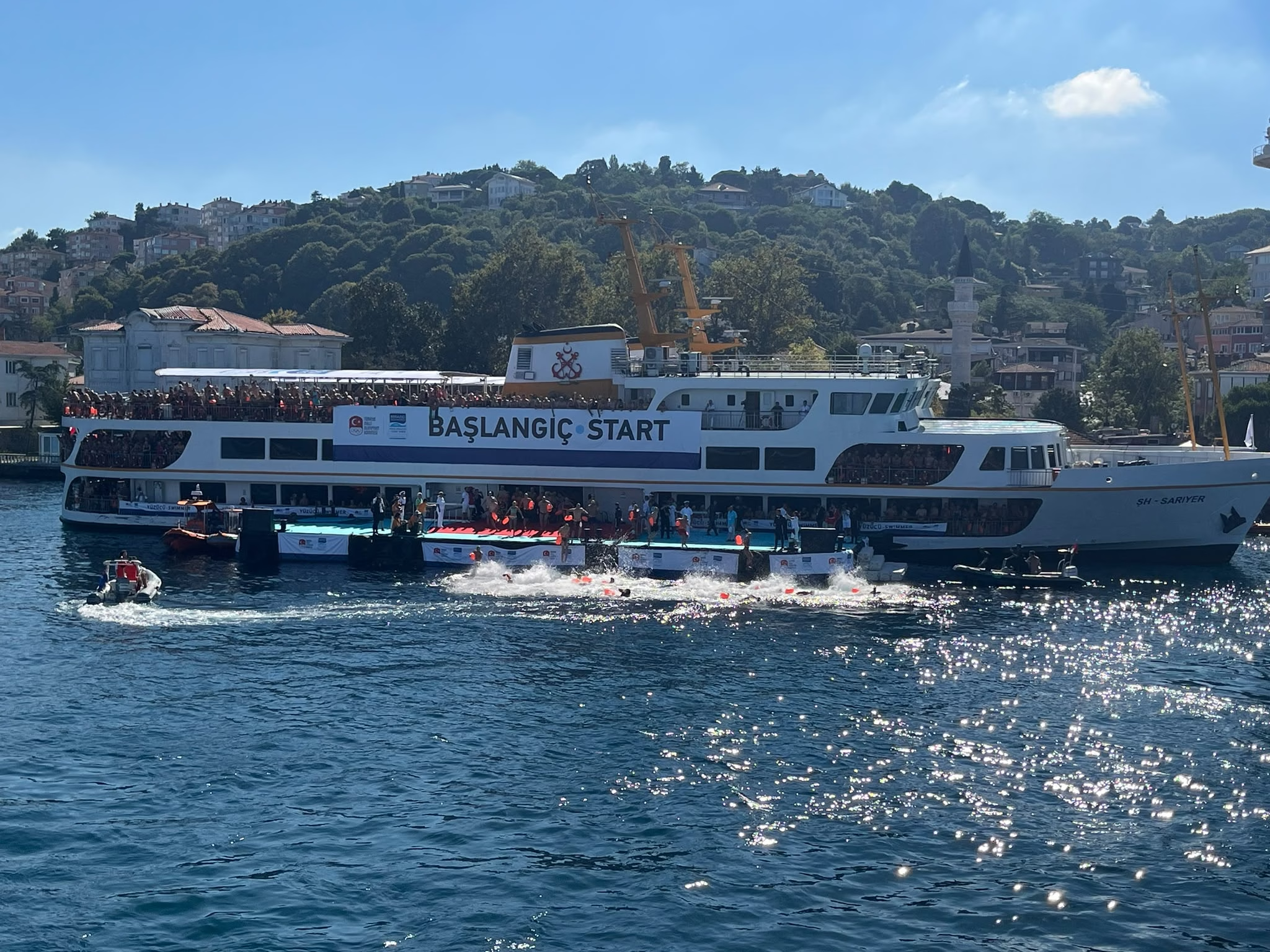

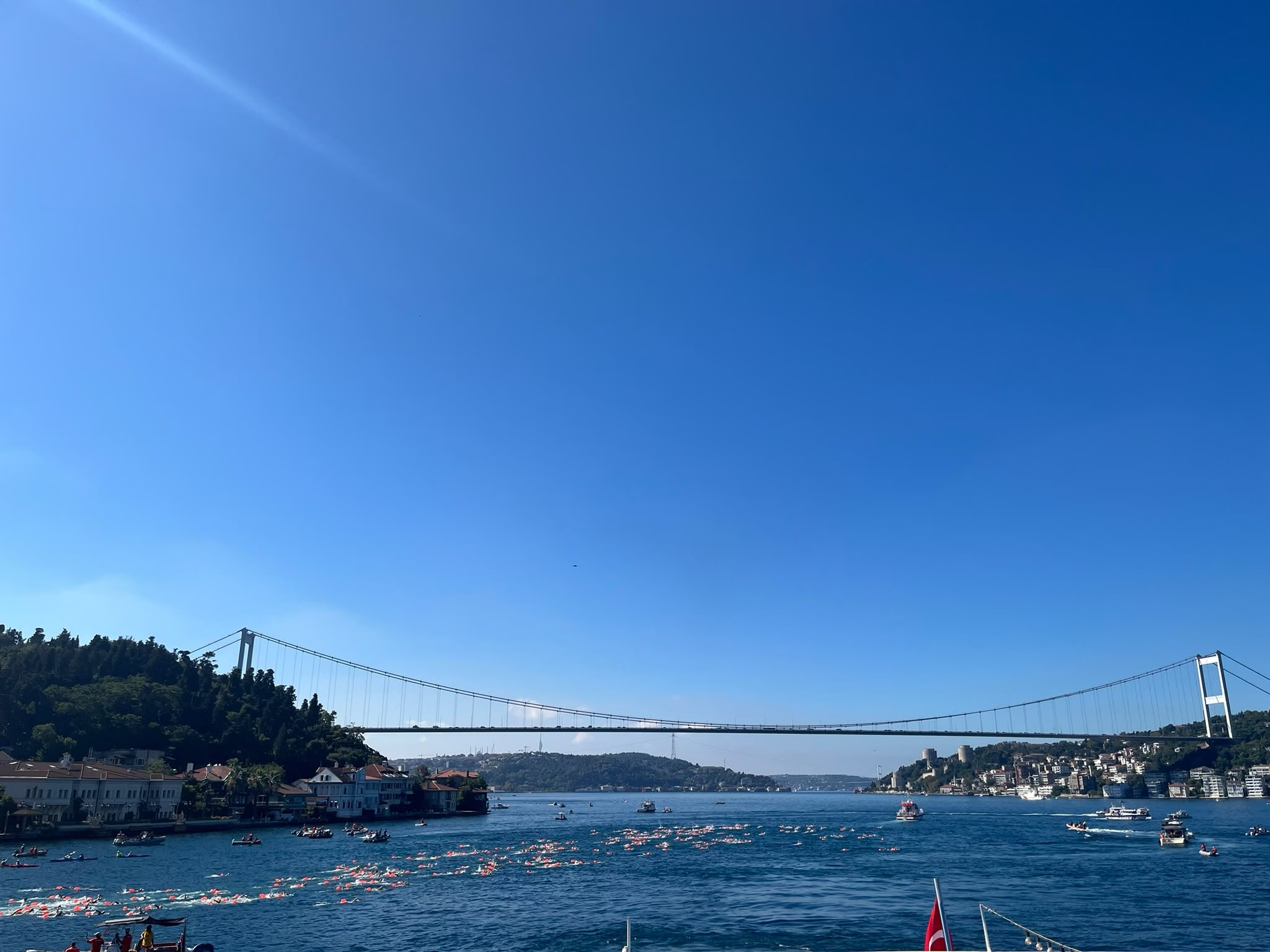
 Once a year in Istanbul, the shipping lanes of the cross-continental Bosphorus strait are closed for one morning to allow 2,500 swimmers from all over the world to swim 6.5km from the Asian to the European continent.
Organized by the Turkish Olympic Committee, the rules are strict: no neoprene, no watch, risk disqualification if you leave on a necklace, cut your nails short or they will hand you clippers to do so. Time cut off is precisely two hours to allow shipping to reopen.
The water is the meeting of two seas, with two opposing currents. The cooler water from the Black Sea will bring you towards the finish; the warmer one from the Sea of Marmara will pull you backwards stronger than you can swim. Most of the swim takes place in the middle forward current, but to succeed, you must enter the backwards current, judging timing and trajectory to ensure you have the energy to cut across to shore.
Numerous swimmers either overshoot the finish and have to swim hard across the current to try to reach the end pontoon before being swept too far back; or turn towards the finish too early and be unable to fight the current to the finish line, needing a boat pickup. Both of which happened this year again.
My Bosphorus adventure started on a Swimtrek trip to Montenegro, where I met Hurriyet, an Istanbul native who swims it with her sister every year. She said, ‘you could totally do it!’ So, a seed was planted. I came home and discovered that our own Fiona Walsh had completed it a couple of years ago. Fiona gave me amazing advice and tips when I was nervously training during the year. As non-Turks must register through an organisation, I used Swimtrek again.
The Swimtrek team organised a boat trip up river to point out the route and navigational landmarks – the middle of the first bridge, the low dipping power lines, the massive Turkish flag on a hill, and most importantly, the tiny Galatasaray islet, after which you turn into the counter current to reach the finish line. As we listened to our guide, I watched smiling faces around me turn to trepidation.
 On the morning of the swim, we set off up the river to the start line in two large boats. I boarded mine with around a thousand or so others at 7:30 for a two and a half hour wait for the race start. I met up with Hurriyet and her sister. With over 20 swims between them, newbies were hanging on their every word. Then finally, jellies were consumed and it was time to fling ourselves off the pontoon and into the water in an each-swimmer-for-themselves scramble. No time to feel scared jumping off, just swim fast out of the way of the next thundering body.
It was a glorious swim for the first three quarters, soft and salty water. I kept in the cool current, sighting frequently to stay in the middle. Then the wind unexpectedly changed direction, rolling big waves into our faces, slowing us down and making it impossible to sight the position of the islet or the finisher flags.
I focused on the only visible landmark, a bridge strut beyond the finish, realising too late I’d spent too long before the turn. I’d overshot and had to make a hard diagonal against the current to try to get to the pontoon ladders.
Never has practice swimming back to the Blackrock tower come in so handy! It was tough work, but I threw my arms into it.
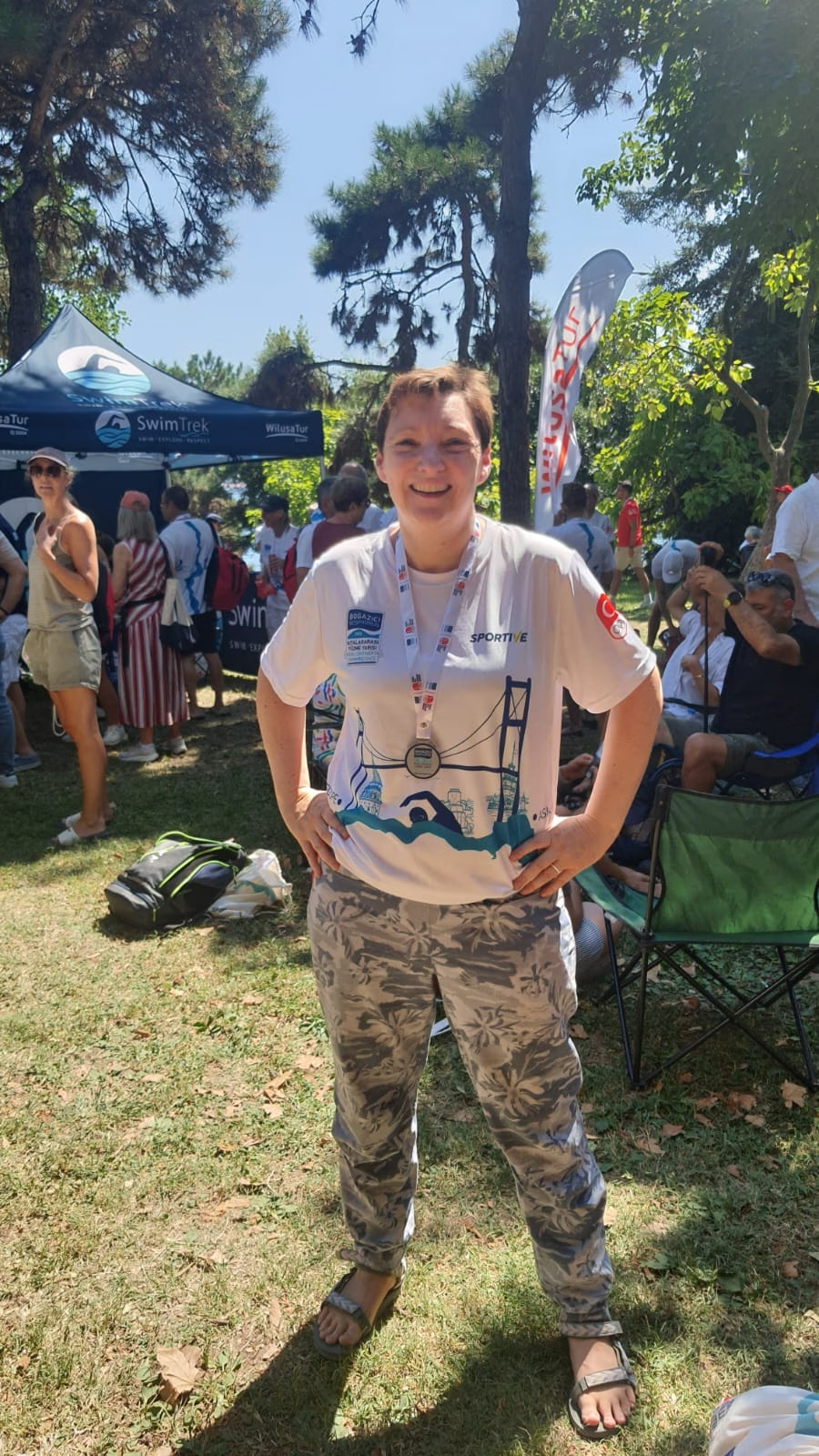
Finally, I was there! Heaving myself up the ladder and trotting over the magical scanning carpet, to finish in a respectable hour and a half. Goodies were thrust into our hands, including the national drink, salty yoghurt! Elated faces were everywhere. I changed quickly into my new souvenir t-shirt to meet Niall, who was waiting in the spectator’s area.
I’m not a long-distance swimmer, or a speedy swimmer, but members of our club inspired me with their great swimming achievements. When I first joined the Tri club, Aideen Allen and Miriam Wall coached me out to the 100m buoy. With the help of numerous Tri club lessons and friends, plus Aisling Lynch and Caroline Doorly’s coaching, I realised I loved being in the water.
Swimming has opened up adventures to me, and I highly recommend the Bosphorus to anyone who fancies a different type of challenge.