

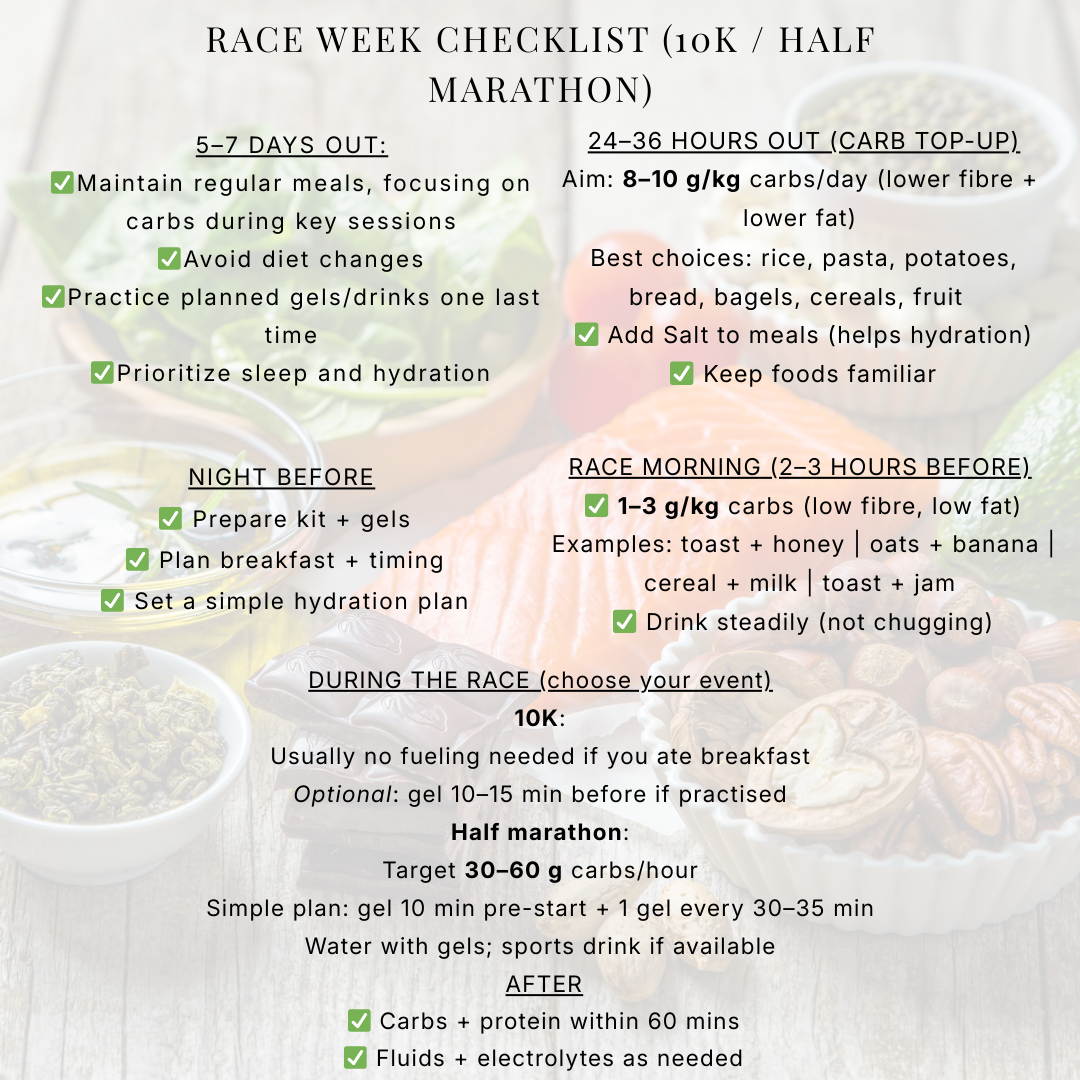
Race Week Checklist (10K / Half Marathon)
Created by: Lisa Fahy, MSc, SENr — Sports Nutritionist
For: GTC Performance Hub
What this guide is for
Use this guide to remove guesswork in race week: keep routines stable, top up carbs at the right time, and arrive calm and fuelled.
Key takeaways
- Keep foods familiar — race week isn’t the time for experiments.
- Carb top-up in the final 24–36 hours (lower fibre + lower fat).
- Plan breakfast timing (2–3 hours pre-start).
- Half marathon fueling needs a simple plan; 10K usually doesn’t (if you ate).
· Hydration is steady, no chugging.
5–7 days out
- Maintain regular meals, focusing on carbs during key sessions
- Avoid diet changes
- Practise planned gels/drinks one last time
- Prioritise sleep and hydration
24–36 hours out (carb top-up)
Aim: 8–10 g/kg carbs/day (lower fibre + lower fat)
Best choices: rice, pasta, potatoes, bread, bagels, cereals, fruit
- Add salt to meals (helps hydration)
- Keep foods familiar
Night before
- Prepare kit + gels
- Plan breakfast + timing
- Set a simple hydration plan
Race morning (2–3 hours before)
Aim: 1–3 g/kg carbs (low fibre, low fat)
Examples: toast + honey | oats + banana | cereal + milk | toast + jam
- Drink steadily (no chugging)
During the race (choose your event)
10K
- Usually no fueling needed if you ate breakfast
- Optional: gel 10–15 min before if practised
Half marathon
- Target 30–60 g carbs/hour
- Simple plan: gel 10 min pre-start + 1 gel every 30–35 min
- Water with gels; sports drink if available
After
- Carbs + protein within 60 mins
- Fluids + electrolytes as needed
Need this personalised? If you’re training for longer events (70.3/IM), struggling with GI issues, or want a race-day fueling plan, message me for 1:1 support.
Contact: Lisa at - hello@elevitanutrition.com
Disclaimer: This content is general education for GTC members and isn’t medical advice. Individual needs vary—please practise fueling in training. If you have a medical condition (e.g., diabetes, GI disease) or a history of disordered eating, seek individual clinical support.